Measure the route the tarp actually travels. Body width plus bow height is not the tarp width, and body length alone is not the roller-to-rear fabric length.
A dump tarp is part of an operating system. Roller location, bow arc, tailgate geometry, side rails, pockets, axle, and attachment pattern all matter.
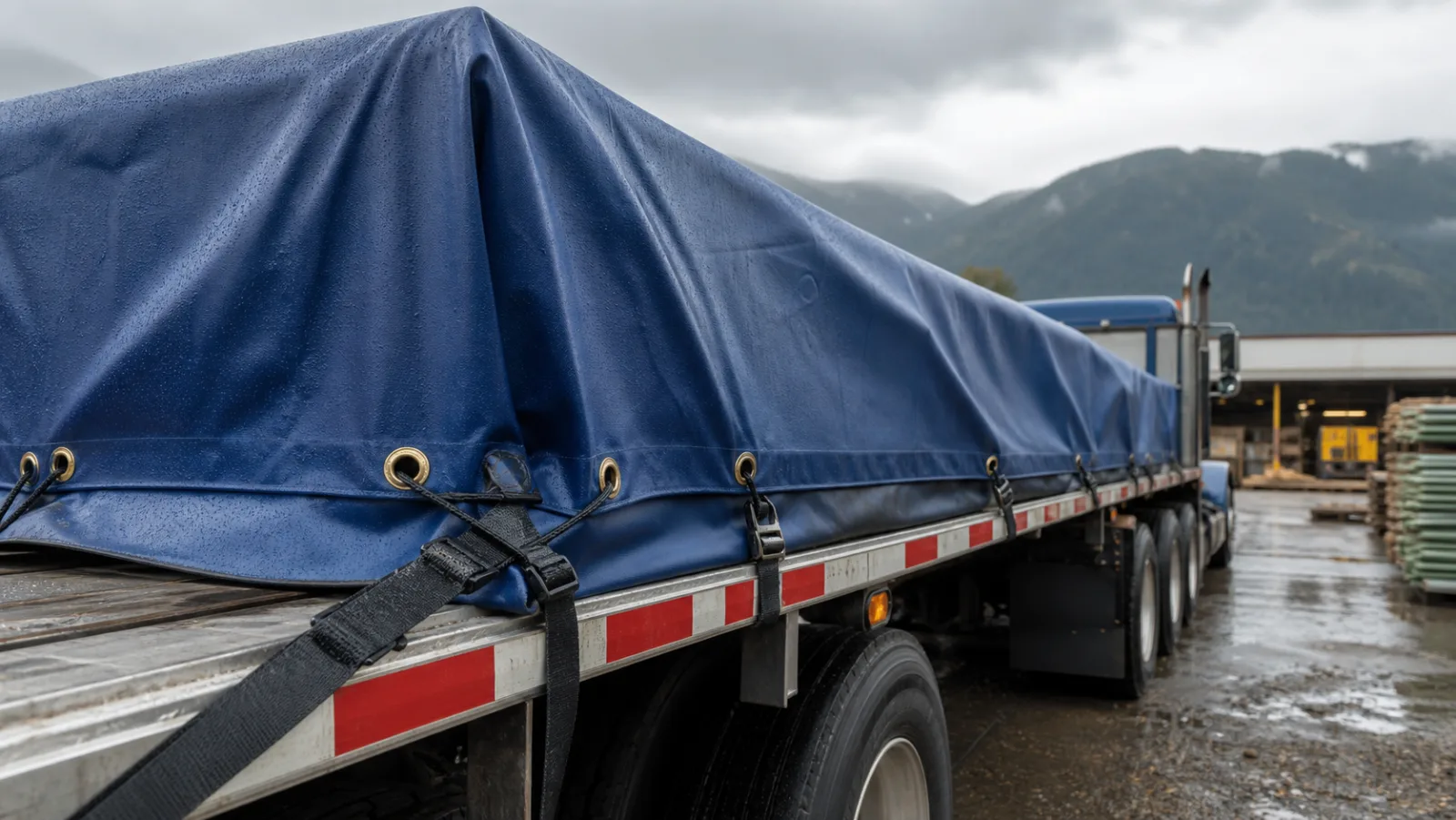
How to measure a dump body
- Park on stable ground, lower the body, isolate power, and follow the equipment maker’s procedure.
- Measure roller attachment to rear landing point along the centerline.
- Use a flexible tape over the highest bow from rail to rail.
- Record front cap, tailgate, pocket, axle, and hardware clearances.
- Compare the old attachment pattern, but do not trust a stretched old tarp as the only template.
Measure over the bow arc
A flexible tape laid on the real arc gives the direct width path. Extra hanging material is not harmless: it can flap, abrade on rails, interfere with moving parts, or enter traffic.
Mesh vs solid fabric
Mesh tarps let air escape as the load settles and reduce wind resistance while covering many loose loads such as aggregate or brush. Solid fabric contains fine material, sheds water, and suits loads where moisture or dust control matters. Fabric choice does not change the measurement path: measure over the bow arc and along the system travel route either way, then confirm the system maker’s approved fabric types and attachment pattern.
Replacing fabric in an existing system
Identify the manufacturer, model, body dimensions, roller direction, and attachment method. Confirm whether the listed size is cut or finished. Generic fabric also needs suitable seams and reinforced connection areas for that system.
Do not size from the truck model alone
Bodies and aftermarket tarp systems differ on otherwise similar trucks. Measure the installed body and system.
Operation and cargo safety
- Keep clear of springs, arms, rollers, and stored energy.
- Do not climb on unstable loads or raised bodies to measure.
- Repair loose fabric before it can reach wheels or traffic.
- Use a separate cargo-securement or containment plan required for the load and operation.
Cargo-securement reference: FMCSA Cargo Securement Rules.
Frequently asked questions
How wide should a dump truck tarp be?
Wide enough to follow the true path over the highest bow from rail to rail, plus the allowance the tarp system specifies for attachment. Measure with a flexible tape over the actual bow arc rather than adding body width and bow height, which underestimates the arc.
How long should a dump body tarp be?
Long enough to travel from the roller attachment to the rear landing point along the system centerline, plus the system allowance. Body length alone misses the roller position, tailgate geometry, and how the fabric lands and tensions.
Can I measure my old tarp and order the same size?
Only as a cross-check. Old fabric stretches, shrinks, and gets re-hemmed, so a used tarp is not a reliable template. Measure the body and system, then compare the old fabric to sanity-check the numbers.
Should a dump tarp be mesh or solid?
Match the fabric to the load and the rules that apply to your operation. Mesh lets air escape and suits many loose loads; solid fabric contains fine material and sheds water. The tarp contains and covers the load but is not a substitute for required cargo securement.
Are electric and manual dump tarp systems measured differently?
The fabric path is measured the same way, but powered systems have stricter requirements for attachment, roller alignment, and fabric condition. Always follow the system manufacturer’s replacement instructions for the specific model.
How this guide was prepared
We separate geometry and unit conversions from product claims, use exact standards where available, and flag specifications that vary by manufacturer. See our editorial policy for the review process.