Find the Right Tarp Size for Any Job
Calculate tarp dimensions, estimate total weight, compare materials, and choose the right cover for roofs, equipment, trailers, trucks, and outdoor storage.
Free. No sign-up. Measurements stay on your device.
Recommended listed size
16 ft × 20 ft
14 ft 8 in × 18 ft 4 in
14 in side coverage
16 in end coverage
Nine tools for a better tarp decision
Build a whole plan in one pass, or open a single tool when you only need one number.
Tarp Plan Builder
Measure once and get the size to buy, a fabric that suits the job, the handling weight, and a price band, plus a list you can save or print.
Tarp Material Selector
Describe your job or answer guided questions to compare PE, PVC, canvas, and mesh.
Tarp Size Calculator
Calculate a minimum cover and round up to a labeled size in the checked listings.
Tarp Weight Calculator
Estimate material weight from dimensions and GSM or oz/yd².
Tarp Unit Converter
Convert length, area, GSM, oz/yd², mil, and millimeters.
Tarp Cost Estimator
Estimate a practical US price range from tarp size and material category.
Camping Tarp Configurator
Recommend a camping tarp size range for hammock, A-frame, footprint, and group setups.
Pool Cover Calculator
Calculate rectangular, round, or oval pool cover size with deck overhang.
Tarp Listing Checker
Check your size against the real listings we opened and read, and see which ones still reach it once the supplier's own finished-size rule is applied.
Choose by job
The right tarp depends on what it must cover, how far it must drop, and what the wind and handling will do to it.
Read the complete sizing guide
Material comparison at a glance
Material names describe a family, not a guaranteed performance level. Compare the finished specification as well as the base material.
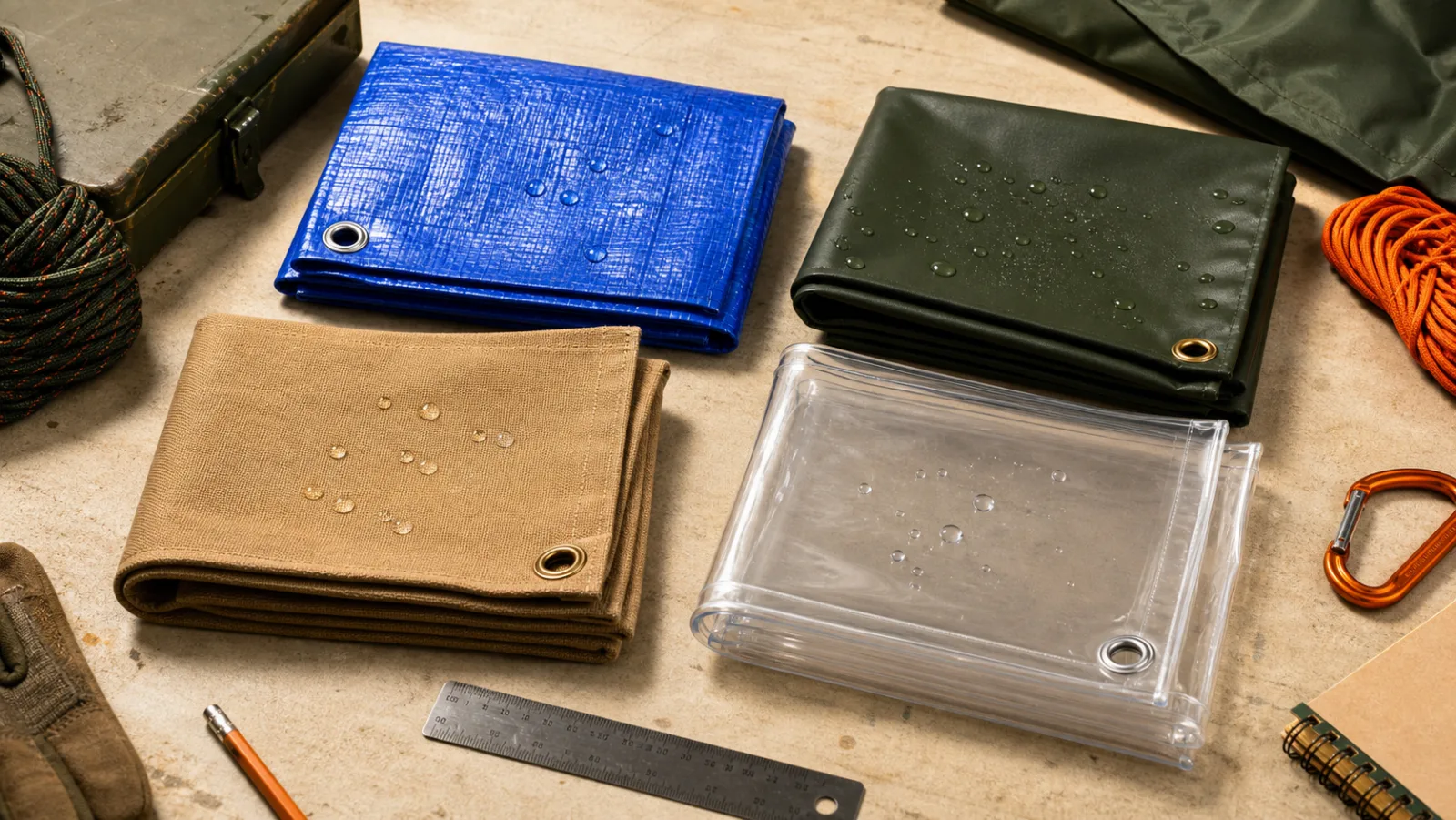
| Material | Typical handling | Useful trait | Common fit |
|---|---|---|---|
| Polyethylene (PE) | Light to moderate | Easy handling, broad general use | Temporary covers, storage, weather protection |
| Vinyl / PVC | Moderate to heavy | Abrasion resistant, flexible, often repairable | Truck, industrial, repeated handling |
| Canvas | Moderate to heavy | Breathable; water resistance varies by treatment | Equipment, jobs needing less condensation |
| Mesh | Light to moderate | Air passes through; not waterproof | Shade, landscaping, load containment where approved |
Measure the object, then add coverage
- Measure the true footprint. Use the longest and widest points, including protrusions.
- Add the drop. For a three-dimensional object, include the height on both sides.
- Add working allowance. Allow for tie-downs, overlap, hems, and imperfect positioning.
- Round up carefully. A stock size must meet both minimum dimensions, even if rotated.
Practical guides by topic
Clear explanations, worked examples, and source notes—written for real buying and measuring decisions.
Tarp Sizing Guide
Measure flat covers, equipment, roofs, and irregular loads without coming up short.
Size Guides · 8 minPVC vs PE Tarpaulin
A practical comparison of weight, handling, abrasion, weather exposure, and cost.
Materials · 8 minHow to Tie Down & Secure a Tarp
Choose connectors, tension corners correctly, and stop wind flap before it shreds the cover.
How-To · 8 minLumber Tarp vs Steel Tarp
Compare lumber and steel flatbed tarps by stock size, drop, and handling weight, and measure so the tarp actually fits.
Truck Tarps · 7 minHow Much Does a Tarp Cost?
Plan realistic US price ranges by size and material, then compare cost per season.
How-To · 7 min