PE is the common lightweight weather-cover starting point; PVC-coated polyester suits repeated exposure and abrasion; canvas helps moisture escape; mesh provides shade and airflow. These are families, not quality grades.
Start with what the cover must do, then compare the finished product—not only the material name.
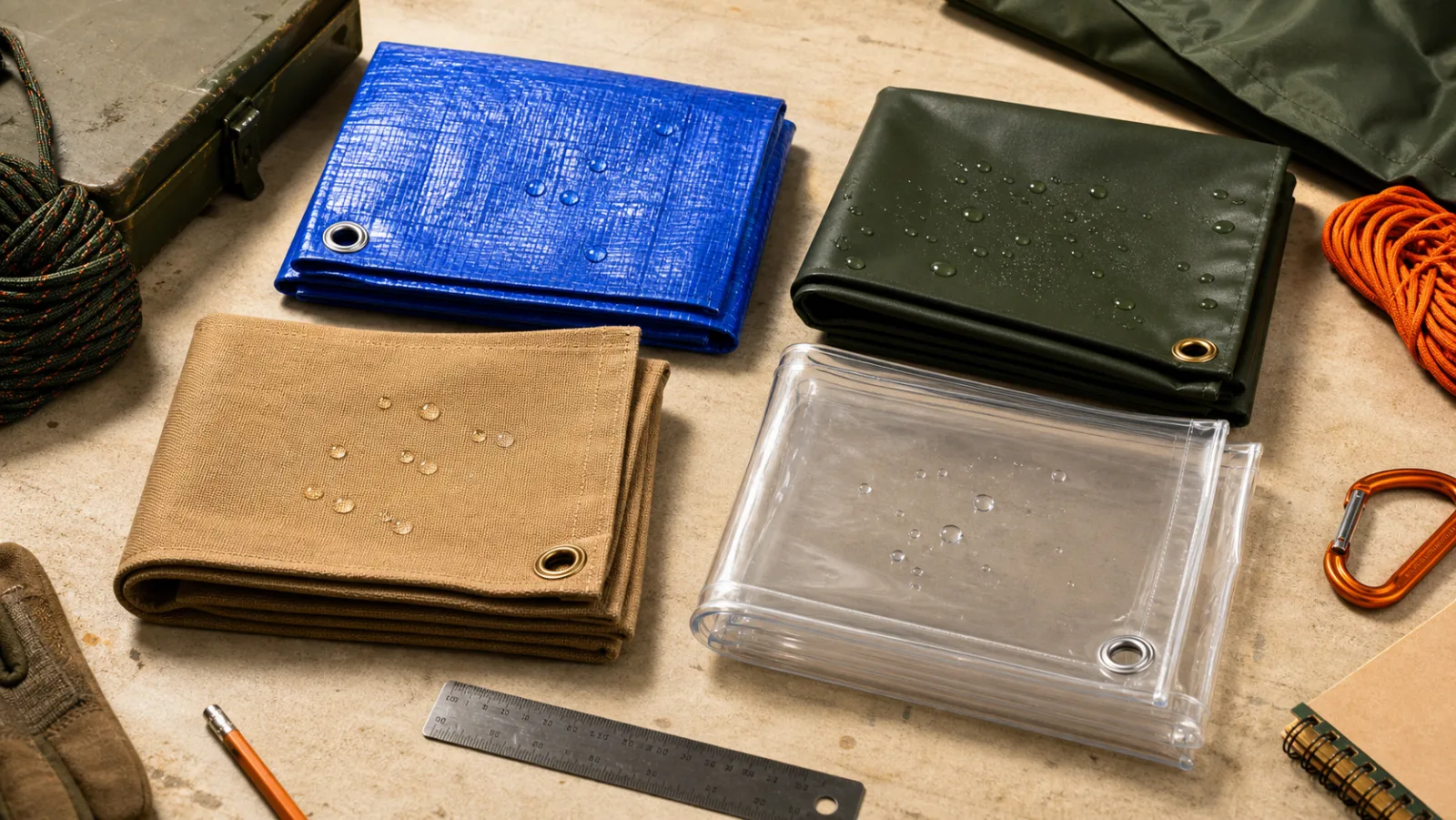
The four main material families
Polyethylene (PE)
Typical PE tarps use woven polyethylene tape with a laminated surface. They are often easier for one person to move and are widely available for temporary or general outdoor coverage. Finished weight, weave, lamination, reinforcement, and UV package vary widely.
PVC-coated polyester
A woven polyester base with PVC coating is commonly considered for repeated outdoor use, equipment, transport, and higher-abrasion jobs. Large sheets can become heavy, so calculate total weight rather than judging by a sample.
Canvas
Canvas is chosen when breathability matters. Cotton and blended constructions, treatments, seams, and water resistance differ; “canvas” alone does not promise outdoor life or waterproofing.
Mesh
Mesh reduces wind resistance and allows airflow. Opening size and shade factor determine how it behaves. It is useful for shade and containment, not as a solid rain barrier.

Quick comparison
| Family | Useful starting point | Main caution |
|---|---|---|
| PE | Lightweight general coverage | Quality varies widely |
| PVC-coated polyester | Repeated use and abrasion | Total handling weight |
| Canvas | Breathable storage | Treatment is product-specific |
| Mesh | Shade and airflow | Not a solid weather cover |
Construction matters as much as fabric
Seams, hems, corners, grommets, webbing, attachment pattern, and finished dimensions decide whether a tarp works as a complete cover. A heavy fabric with weak hardware can still fail at the first concentrated load point.

Choose from the job backward
- Define water, airflow, abrasion, sun, cold, and handling needs.
- Calculate the finished size and approximate weight.
- Protect every sharp edge and plan drainage.
- Verify a product specification that matches those needs.
What to verify before buying
- Finished dimensions and tolerances
- Finished mass per area and total product weight
- Base fabric, coating or treatment, seam method, hems, and hardware
- Product-specific UV, temperature, water, flame, strength, and warranty information where relevant
GSM is mass per unit area, not a universal durability grade. See our GSM guide and editorial policy.
Frequently asked questions
Which tarp material is the most waterproof?
Intact coated synthetics such as PVC-coated polyester and laminated PE provide the most reliable water barrier when new and undamaged. Seams, pinholes, worn coatings, and poor drainage decide real-world performance more than the material name. Canvas resists rain only according to its treatment.
What tarp material lasts longest in the sun?
UV life depends on stabilization, coating, and color, not just the base polymer. Heavily stabilized PVC-coated fabrics generally tolerate long outdoor exposure better than light PE sheets. Any fabric left in sustained sun needs periodic inspection regardless of family.
Is canvas or plastic better for covering equipment?
Choose by moisture behavior. Canvas breathes and reduces condensation against the machine, which helps long-term storage, but its rain resistance varies by treatment. Coated synthetics shed rain reliably but can trap condensation. For outdoor storage, many owners use a breathable cover with a small weather-shedding top sheet.
What is the lightest tarp material to handle?
Woven PE sheets are the lightest common solid covers, which is why they dominate one-person and casual use. Mesh is also light but is not a rain barrier. Large PVC-coated covers are the heaviest and often need two people or a handling plan.
Does tarp color tell me the quality or duty rating?
No. Color conventions vary by manufacturer and retailer. Judge by finished weight, weave or scrim, coating, reinforcement, and stated specifications, not by whether the sheet is blue, silver, green, or brown.
How this guide was prepared
We separate geometry and unit conversions from product claims, use exact standards where available, and flag specifications that vary by manufacturer. See our editorial policy for the review process.