Most solo A-frame setups land between 8×10 and 10×12 ft. A hammock rain fly is sized from the hammock ridgeline instead, so an 11 ft hammock takes a 10 to 11 ft tarp and 8×10 ft is mild-weather coverage rather than a full fly. Measure the sleeping area and the ridgeline first, then add side drop for rain and wind.
Camping tarps fail when they are sized like flat ground covers. The useful number is the coverage you still have after the pitch creates slope, doors, and side walls.
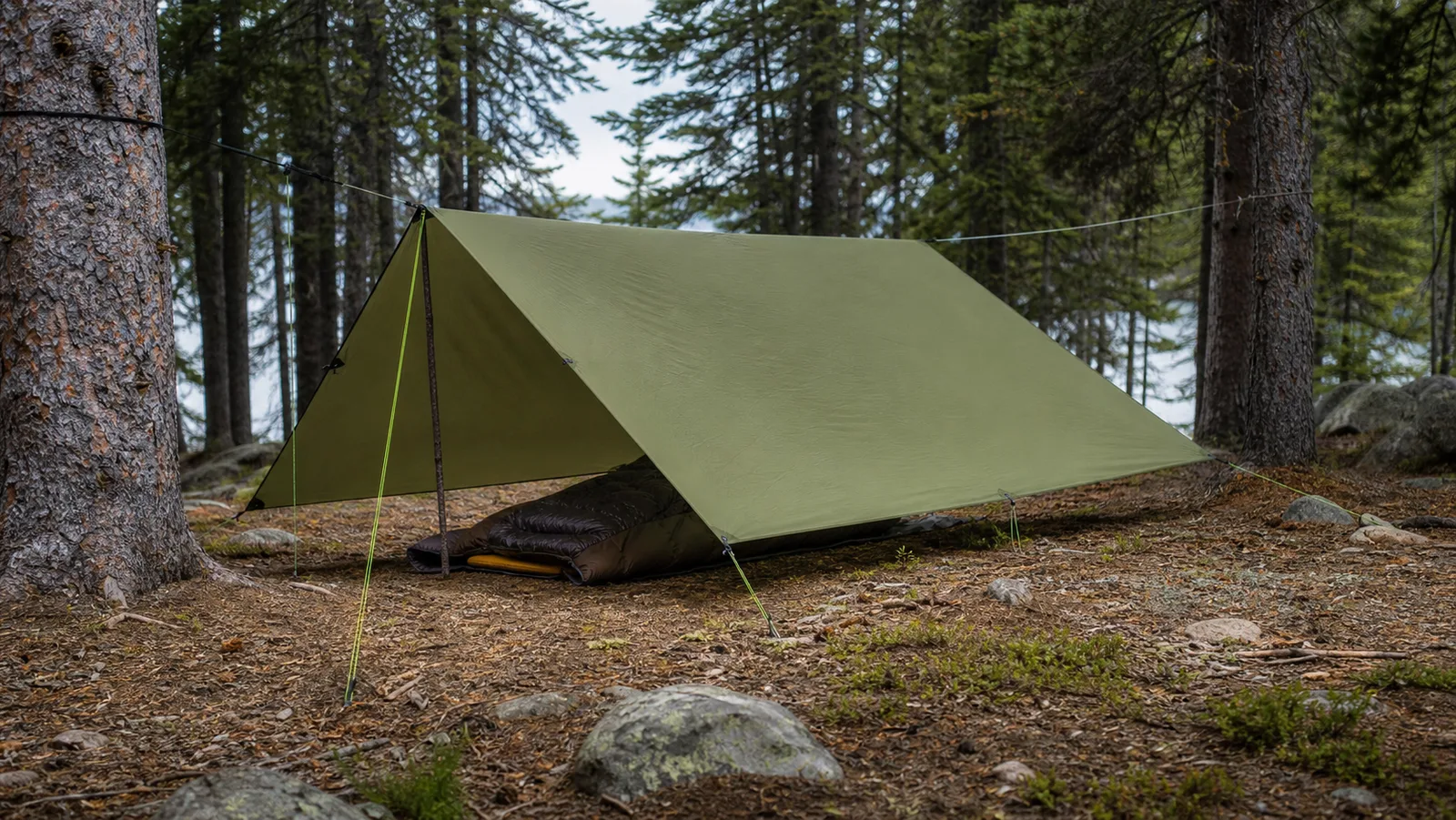
Common camping setups
| Setup | What to cover | Typical size starting point |
|---|---|---|
| Hammock rain fly | Sleeper + hang angle + gear under hang | 8×10 ft for a short hang; 10 to 11 ft of tarp length for an 11 ft hammock |
| A-frame shelter | Sleeping pad length + porch/door space | 8×10 to 12×12 ft |
| Tent footprint | Tent floor only, slightly undersized | Match tent floor minus a few inches |
| Group / cook shelter | Seating or kitchen area | 12×16 ft and up |
Practical size ranges
- 8×10 ft: tight A-frame, groundsheet, or center coverage over a short hang — not a full fly for an 11 ft hammock
- 10×10 ft: flexible solo square for diamond or A-frame pitches
- 10×12 ft: roomier solo or small two-person coverage
- 12×16 ft: two-person camp, cook fly, or family car-camping shade
How to measure before you buy
- Measure the sleeping length you actually need, including pack or dog space.
- For hammocks, measure the expected ridgeline span between hang points.
- Decide side-wall height in rain: more drop means less splash, less headroom.
- Add tie-out margin if the tarp must reach stakes beyond the sleeping area.
Worked example
A solo camper hangs an 11 ft hammock and wants rain coverage with gear under one end. Length comes first, and it does not come from the distance between the trees: the number printed on a hammock tarp is its ridge seam, and the number it has to beat is the hammock's own ridgeline. Warbonnet Outdoors publishes both — an 11 ft hammock has a 112 in ridgeline and an 11 ft (132 in) tarp leaves about 10 in of tarp overlap at each end — and its 111 in ridgeline hammocks arrive at the same answer. That is why the 13 ft version is aimed at bridge hammocks rather than sold as better solo coverage.
Width then sets how much side wall you get. A 10 × 12 ft tarp leaves sitting room and enough skirt to pull down when rain drives sideways. A 10 × 10 ft square is lighter and pitches as a diamond in mild weather. Dropping to 8 ft in length moves the cover out of rain-fly duty: the hammock ridgeline is longer than the cover, so the ends stay exposed.
Material notes for camping
Hardware-store PE is durable and cheap for car camping. For backpacking, packed weight, reinforced tie-outs, and tear resistance matter more than mil marketing. Clear or translucent panels are poor primary rain flies because they can create greenhouse heat and glare.
Hammock geometry source: Warbonnet Outdoors, Superfly tarp — an 11 ft hammock ridgeline of 112 in, an 11 ft (132 in) tarp leaving about 10 in of overlap at each end, its 111 in ridgelines on the Blackbird XLC and Eldorado landing on the same answer, and 13 ft tarps intended for bridge hammocks. The size ranges on this page combine that published geometry with common US retail shapes rather than quoting a single catalogue.
Frequently asked questions
What size tarp do I need for a hammock?
Size the length from the hammock ridgeline, not the distance between the trees, because the fly has to run past both ends of the hammock to shed water past them. Warbonnet Outdoors publishes an 11 ft hammock ridgeline at 112 in and pairs it with an 11 ft (132 in) tarp that leaves about 10 in of tarp overlap at each end, with its 111 in ridgeline hammocks landing on the same answer. A 10×10 ft tarp covers the sleeper and the gear directly under the hang in mild weather; an 8×10 ft belongs over an A-frame or a groundsheet rather than over an 11 ft hang.
Is a square tarp better than a rectangular one for camping?
Squares are flexible for diamond and A-frame pitches. Rectangles often cover a sleeping pad or tent footprint more efficiently. Choose the shape that matches your most common pitch, not the one that merely looks bigger on paper.
Can I use a hardware-store PE tarp for backpacking?
Yes for car camping or short trips, but heavy PE with metal grommets is bulky. Ultralight campers usually prefer silnylon or silpoly tarps with reinforced tie-outs and lower packed weight.
How high should I pitch a camping tarp?
High enough for ventilation and sitting room, low enough that wind and rain do not drive underneath. In storms, drop the windward edge closer to the ground and stake it out firmly.
Do I need a groundsheet as well as a rain tarp?
Often yes. A rain fly protects from above; a separate groundsheet or footprint protects your pad and bag from abrasion and ground moisture. They solve different problems.
How this guide was prepared
We separate geometry and unit conversions from product claims, use exact standards where available, and flag specifications that vary by manufacturer. See our editorial policy for the review process.