Most tarps fail from UV, wind flap, and chafe long before the center of the fabric wears out. Small tears and grommet pull-outs are often repairable if you match the patch to the coating. Brittle, multi-corner failure means replace the cover.
A repair kit and five minutes of prevention often add seasons of service. The wrong tape on the wrong fabric wastes time and fails on the next windy night.
How long tarps last in the real world
Service life is a system result, not a material slogan, and almost no supplier publishes a number of years. What suppliers do publish is treatment, and that is the better guide. Tarps Plus states that many tarps are UV-treated, that poly, vinyl, and waterproof canvas tarps made with UV inhibitors handle prolonged exposure better than untreated material and resist degradation such as cracking, fading, and brittleness, and that its light blue poly sheets are not designed for heavy or prolonged exposure. Its heavy-duty, vinyl, and canvas lines are described as far better on UV stability. Warbonnet Outdoors reports the other half of the picture: a polyester shelter fabric left outside for about two months lost a large share of its strength to sun exposure, whichever fabric it was.
So the working answer is not a season count. Read the treatment the listing actually states, keep the cover tensioned so it cannot flap, pad the contact points, and store it clean and dry. The same sheet can look untouched in shade and fail quickly in full sun with constant wind; the exposure does most of the damage, and the coating decides how fast.
How tarps actually fail
- UV embrittlement: fabric chalks, stiffens, then cracks on folds.
- Wind flap: repeated snapping destroys grommets and coatings.
- Chafe: sharp edges and rubbing points saw through the sheet.
- Pooling: water weight stretches and tears low spots.
- Hardware failure: rusted, deformed, or pulled-out grommets open the next tear.
Repair methods by material
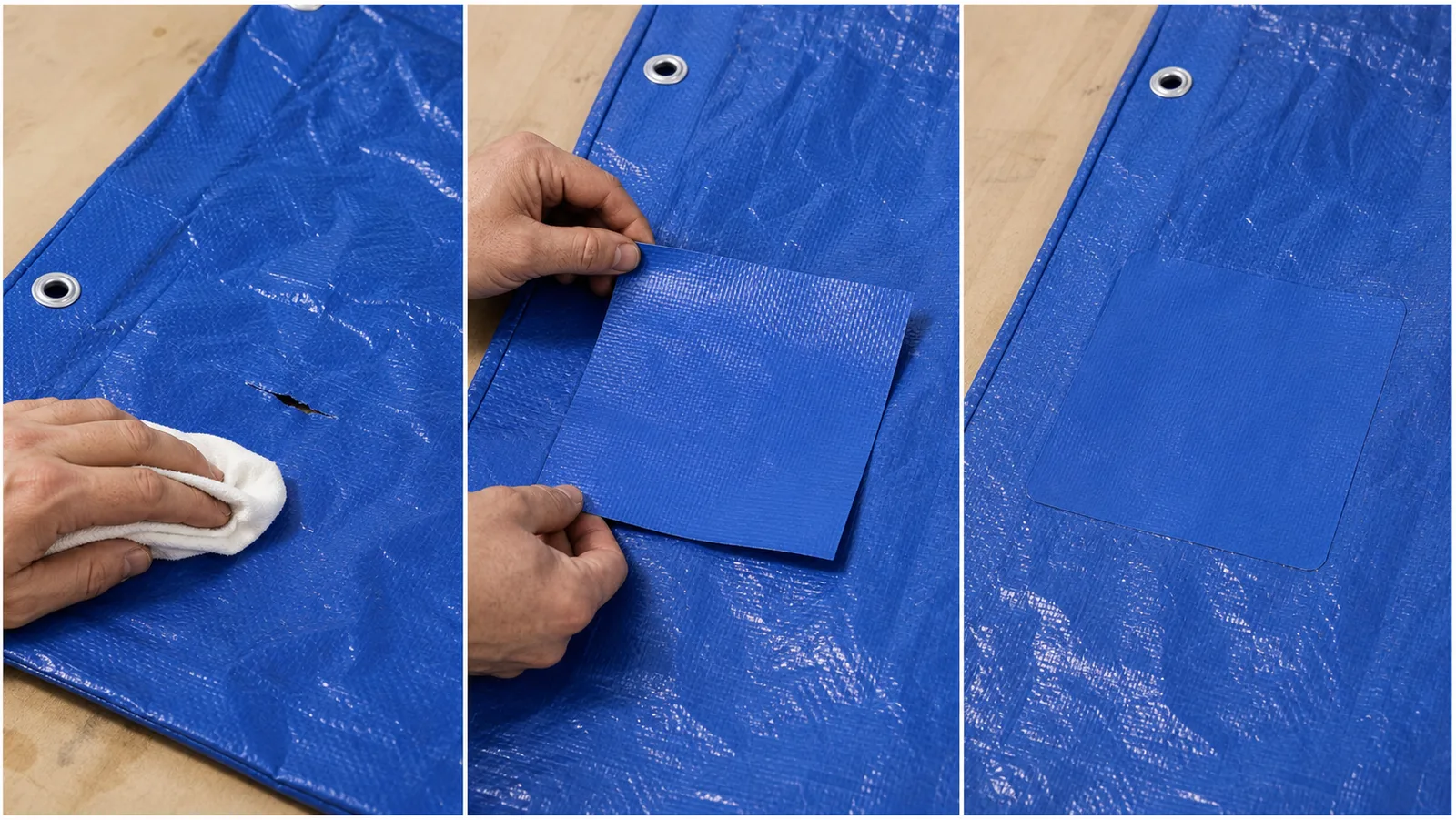
| Material | Preferred repair | Avoid |
|---|---|---|
| PE laminated tarp | PE patch kit / polyethylene-compatible adhesive | Assuming duct tape is permanent |
| PVC-coated fabric | PVC patch with matching adhesive or weld method | PE-only tapes that will not bond well |
| Canvas | Sewn patch or canvas-compatible repair products | Sealing the fabric so it cannot dry |
- Clean dirt, wax, and loose coating from a wide area around the damage.
- Dry completely. Moisture kills most adhesive bonds.
- Cut a patch with generous margin past the tear on all sides.
- Round the patch corners so they are less likely to peel.
- Bond with the chemistry that matches the coating, then cure fully before loading the cover.
Grommet and corner repairs
If a grommet has torn out, do not just force a rope through the hole. Patch the damaged area first, then either install a new grommet through reinforced material or move the attachment to a tarp clip on sound fabric. Corner failures are structural: reinforce them or the next load will open a larger tear.
Prevention that works better than patches
- Tension the cover so it cannot flap.
- Create drainage so water cannot pool.
- Pad every sharp contact point.
- Store the tarp clean and dry when not in use.
- Retire brittle bungees before they snap and damage the fabric.
When to replace instead of repair
Replace the tarp when fabric tears easily by hand, coating is widely cracked, multiple edges are failing at once, or the cover can no longer be tensioned without creating new damage. Continuing to patch a UV-dead sheet is false economy.
Exposure wording: the Tarps Plus FAQ on UV-treated tarps, UV inhibitors, and which of its material lines it describes as suitable for prolonged exposure, and Warbonnet Outdoors on a polyester shelter fabric left outside for about two months. Repair methods here follow the coating chemistry each listing describes rather than one brand's kit, and this page quotes no service life in years because the suppliers publish none.
Frequently asked questions
How long does a tarp usually last outdoors?
Few suppliers publish a number of years, so treat any season count as your own estimate rather than a specification. What is published is UV treatment: Tarps Plus says tarps made with UV inhibitors resist cracking, fading, and brittleness under prolonged exposure, and that its light blue poly sheets are not designed for heavy or prolonged sun. A cover that is tensioned, padded, and stored dry outlasts a loose one of the same material.
Can I repair a ripped PE tarp with duct tape?
Only as a short emergency fix. Duct tape loses grip on dirty, wet, or sun-heated PE. Use a PE-compatible patch kit or adhesive designed for polyethylene if you want the repair to last.
How do I repair a PVC tarp?
Clean and dry the area, then use a PVC patch with the adhesive or welding method specified for that coating. Generic tapes often peel. Match patch chemistry to PVC, not to PE.
What causes grommets to tear out?
Usually wind flap, overtight straps, or missing reinforcement. Repair the hole with a patch and a new grommet or move the load to a clip on sound fabric. Fix the tension plan so the same corner is not hammered again.
When is a tarp not worth repairing?
When UV has made the fabric brittle across large areas, when multiple corners are failing, or when the cover no longer holds tension without creating new tears. At that point, replacement is safer and cheaper.
How this guide was prepared
We separate geometry and unit conversions from product claims, use exact standards where available, and flag specifications that vary by manufacturer. See our editorial policy for the review process.