A draped flatbed cover, utility-trailer cover, and powered dump-trailer roll tarp use different measurement paths. Identify attachment points and operating direction before choosing dimensions.
Trailer deck size is only the starting footprint. The load height, unequal drops, bows, roller position, tailgate, and overlap determine the fabric path.
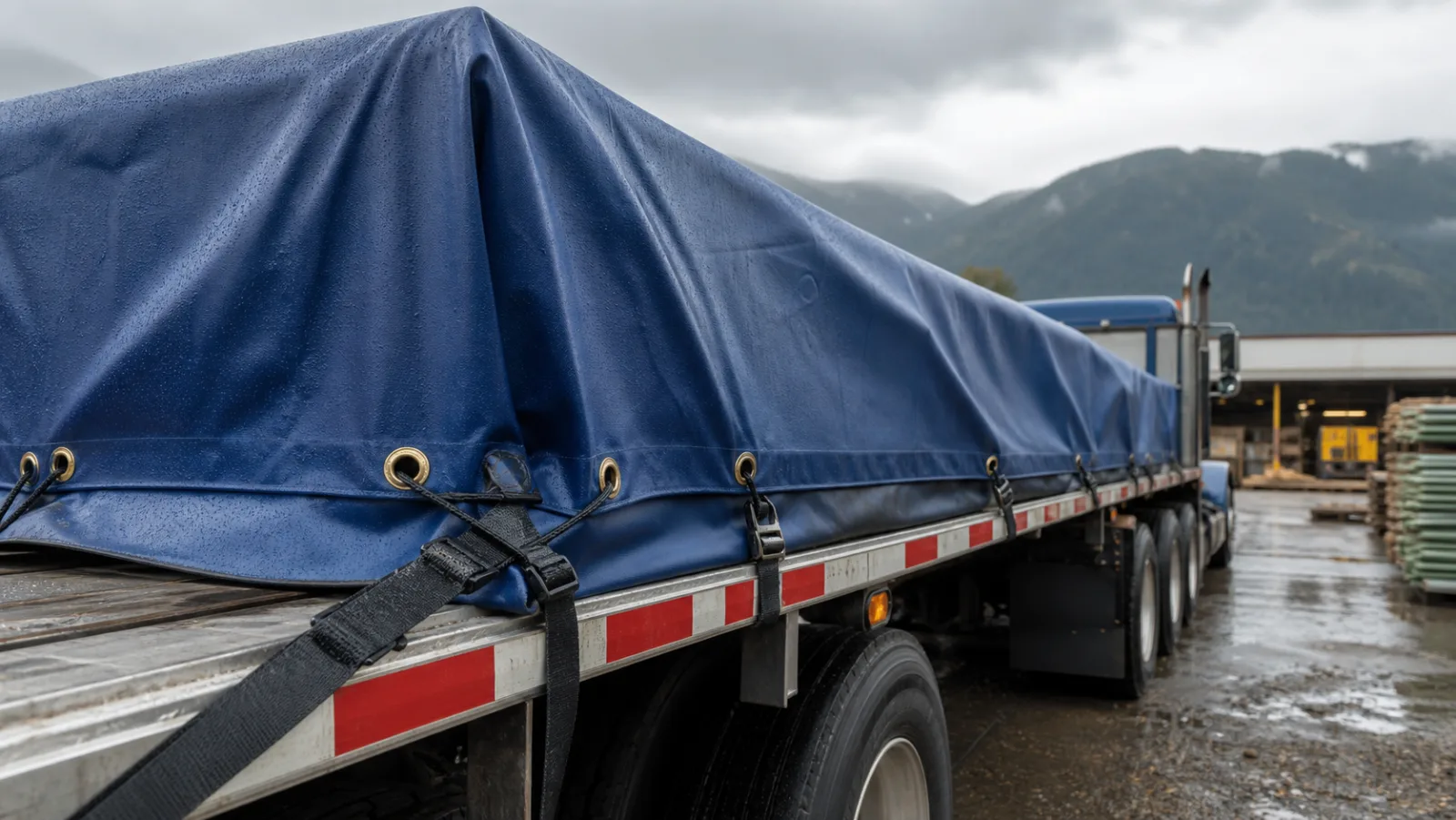
The measurements to record
- Loaded length at the longest point
- Loaded top width at the widest point
- Actual left and right side drops
- Front and rear drops or required overlap
- Every sharp edge, anchor zone, light, wheel, and moving part
For a draped rectangular load, working width equals top width plus left drop plus right drop. Working length equals loaded length plus front drop plus rear drop. Add only the allowance needed for positioning and attachment, then round up in both dimensions.
Worked example
A 6 × 12 ft utility trailer carries a centered load 10 ft long, 5 ft wide, and 3 ft above the deck. You want the cover to reach the rub rail, about 1 ft below deck top on each side. Working width is 5 + 4 + 4 = 13 ft; working length is 10 + 2 + 2 = 14 ft with front and rear overlap. A 14 × 16 ft cover fits with margin, and its corners can be managed by folding rather than dragging. The same trailer with a heaped mulch load needs a fresh measurement, because the top width and drops both change.
Flatbed and utility trailers
Loads are rarely centered perfectly. Measure unequal drops instead of forcing a symmetrical assumption. Multiple tarps need overlap oriented so expected airflow reaches the upper tarp first. Protect sharp load edges with purpose-made edge protection.
Dump trailer roll tarps
Measure along the system’s real travel path—from roller attachment to landing point and over the highest bow. Replacement fabric must match the roller, axle, pockets, and manufacturer attachment pattern. Do not use deck dimensions as a substitute for the system’s replacement-tarp instructions.
Weather coverage is not automatically securement
FMCSA says cargo on applicable commercial vehicles must be firmly immobilized or secured by suitable structures, dunnage, tiedowns, or a combination. A weather cover does not automatically meet those requirements. Follow the system maker, carrier plan, and applicable law.
Source: FMCSA Cargo Securement Rules.
Frequently asked questions
What size tarp do I need for a utility trailer?
Measure the load, not just the deck. Working width is the loaded top width plus the drop down both sides; working length is the loaded length plus front and rear coverage. A 5 × 8 ft utility trailer with a low load often works with a cover in the 8 × 12 ft range, but compute from your loaded profile.
How much drop should a trailer tarp have?
Enough to cover the load side and reach a secure attachment line below the top edge. Drops that end mid-load leave gaps; drops that drag on the road or wheels are dangerous. Measure the real drop on both sides, because loads rarely sit perfectly centered.
Can I use one tarp for different loads on the same trailer?
You can, but size for the largest realistic loaded profile and plan how you will manage the extra fabric on smaller loads. Loose fabric flaps, abrades, and can reach wheels or the road. Many owners keep two covers sized for their common load profiles.
Do dump trailer roll tarps use the same measurements as draped covers?
No. Roll tarps are measured along the system’s travel path: roller attachment to rear landing point, and over the highest bow from rail to rail. Follow the system manufacturer’s replacement instructions rather than a generic size formula.
Does a trailer tarp count as load securement?
No. FMCSA cargo-securement rules require the load itself to be immobilized or secured by rated structures, dunnage, or tiedowns. A tarp protects against weather and debris; it does not hold the load. Treat coverage and securement as two separate systems.
How this guide was prepared
We separate geometry and unit conversions from product claims, use exact standards where available, and flag specifications that vary by manufacturer. See our editorial policy for the review process.